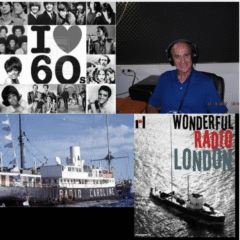
The pirate ship Radio Caroline that changed the music face of Great Britain forever after Ronan O’Riley discovered how the major record companies had exclusive access to the BBC, preventing anyone else from getting their records played on the very limited available music shows at that time.
 It was also discovered that a similar system was being operated at Radio Luxembourg, the station that so many British teenagers including yours truly admitted to listening on their little transistor radios under the bedsheets late at night.
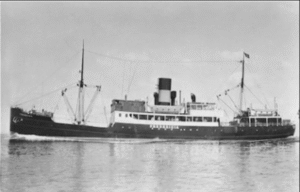
So Ronan O’Rahilly bought a Danish passenger ferry the M.V Frederica (pictured) and when it left Rotterdam after the purchase it became the M.V Caroline.
Although there are claims the ship was named after O’Rahillys wife, there is nothing or no one to substantiate that claim.
The ship sailed from Rotterdam to Greenore in Southern Ireland, where it was fitted out in secret to become Radio Caroline.
There were obvious reasons for this secrecy as it was known there were other competitors such as the investors behind another pirate ship Radio London, but the main reason was to prevent the British Government from having any idea of what was about to be launched off the coast of Essex to at last challenge the dogmatic adherence to limited pop music broadcasting as undertaken by the BBC.
RADIO CAROLINE FIRST BROADCAST
And so on Good Friday March 27th 1964 Radio Caroline began her test broadcasts while anchored in international waters off of Felixstowe, Essex.
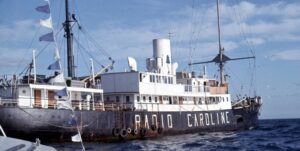 At midday on Easter Saturday March 28th Radio Caroline began her official broadcasting launch with the Rolling Stones “Not Fade Away,” Simon Dee was the presenter who along with programme director Chris Moore presented the first ever programme.
The first frequency used was 1520 kHz, which is 197.4 metres, announced as 199 metres. So Caroline on 199 became the slogan, so named because Ronan O’Rahilly wanted 199 to rhyme with Caroline.
MILLIONS TUNE INTO RADIO CAROLINE ON THEIR SIX TRANSISTOR RADIOS
In no time at all Radio Caroline had millions of listeners and was making a great deal of money from advertising so a merger between Radio Caroline 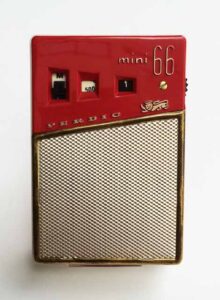 and another offshore pirate radio station Radio Atlanta broadcasting from the ship the MV Mi Amigo was proposed with the Mi Amigo becoming Radio Caroline North anchored off the Isle Of Man.
Very soon, with both stations covering most of the U.K. and Ireland and large areas of the continent, the commercial side of the operation took off with huge fan clubs, a Christmas annual as well as merchandise that was often pirated (naturally) by businesses that were nothing to do with Caroline. And the DJ’s themselves hosted club shows on land at places like the Chislehurst Caves near London
There was even a Caroline Coffee Bar opened in Felixstowe.
The record companies who had previously had all the airtime on the BBC and on Radio Luxembourg a land based radio station broadcasting from Luxembourg to the U.K. each evening soon realised the potential of this new venture and pay for play became another arm of the Caroline commercial activities.
SIMON DEE EMPEROR ROSKO JOHNNY WALKER FRISBEES
But the companies did not reckon with the censorship of DJ’s such as Simon Dee, Emperor Rosko, and Johnny Walker who faced with playing music they absolutely hated that was actually bought and paid for by the various record companies amused themselves by launching the discs into the North Sea as if they were Frisbees.
TONY BLACKBURN
Tony Blackburn noticed an advertisement in The New Musical Express in June 1964 that stated, “DJs wanted.” so he sent a demo tape in reply to the ad and was hired on wages of £15 per week, which was far above the average wage at the time and by the time he left to join Radio London in June 1966 he was on £30 per week and by the end of 1966 Radio Caroline were paying their top DJ’s £70 per week to prevent them from leaving to join rival pirate broadcasters.
SIR ROGER GALE MP, A PIRATE
In 1965 the current MP for Thanet North was invited to an audition and 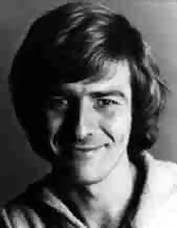 subsequently joined Radio Caroline North, he then went on to become the programme director for Radio Scotland and at radio 270 before coming ashore to join the BBC before moving into Television and eventually the House of Commons.
THE MARINE OFFENCES BILL
In the spring of 1967, the Postmaster General the Labour MP Edward Short, told a series of lies to the house about the offshore pirate ships in order to persuade MP’s to vote for the Marine Offences Bill.
This is the same Edward Short that was later accused of acting as a banker for bribes in the Poulson case.
Despite a huge lobby against the bill, the lies won and most of the pirate stations including Radio Caroline’s main rival Radio London went off the air no later than midnight on the day the bill became law.
But Ronan O’Rahilly forever the Irish rebel against unnecessary authority that he was vowed to keep broadcasting.
A number of DJ’s including Johnny Walker vowed to defy the bill, but he too eventually came ashore and enjoyed an extensive career on BBC Radio stations along with others before finally going to the great gig in the sky at the age of 79, and 58 years of brilliant broadcasting.
Radio Caroline still exists today albeit in a different format to the original and any interested reader can access the website by clicking the link below.